
A city’s growth is most impactful when its economic development is directly tied to the well-being of its residents. As urban areas expand, investing in local businesses, job creation, workforce training and equitable access to economic opportunities ensures that residents benefit from the city’s progress. When development focuses solely on infrastructure or attracting outside investment without uplifting the existing community, it often leads to displacement and widening income gaps. However, a city that grows with its people—by supporting entrepreneurship, creating inclusive economic policies and prioritizing affordable living—builds a stronger, more stable economy rooted in shared success.
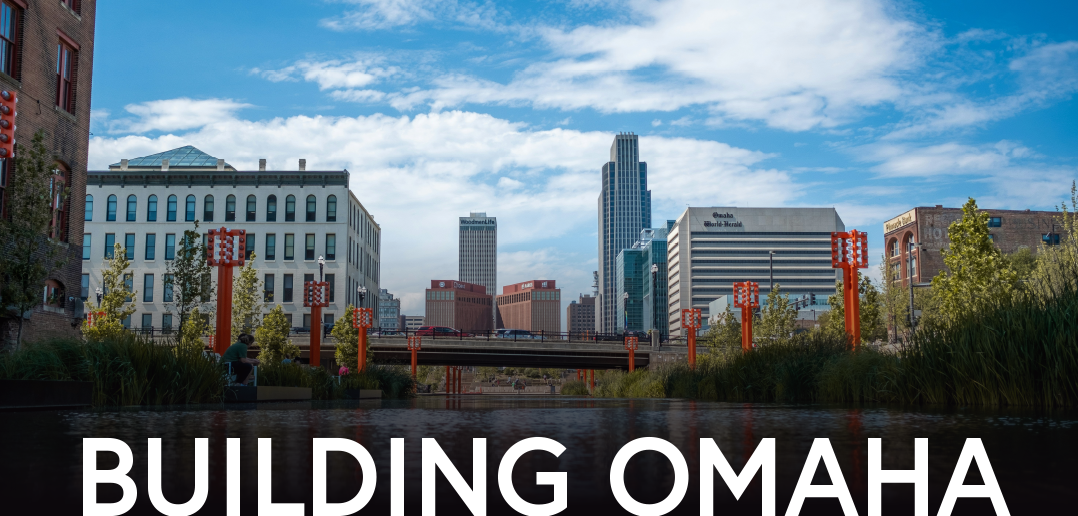
As the 1990s began, Omaha was a city that had grown for decades in one direction: out. Between 1950 and 1990, Omaha’s city limits expanded by 154% while its population grew by only 33%. To balance this trend, the city’s Master Plan emphasized reinvestment in core neighborhoods alongside well-planned development on the edges. In recent years, the results of long-term planning are evident. The Omaha-Council Bluffs metropolitan area surpassed the 1 million population milestone in 2024, reaching 1,001,010 residents, according to the U.S. Census Bureau. That growth represents an increase of more than 12,000 people in just one year and a 3.45% rise since the 2020 census. The metro spans five counties in Nebraska and three in Iowa, making it one of the Midwest’s fastest-growing regions.
Construction continues to play a central role in Omaha’s expansion. Nebraska has 47,446 workers in construction and extraction roles, and about 50% of them are based in the Omaha-Council Bluffs metro area. In 2024 alone, the city issued nearly 1,700 building permits in City Council District 2, with a valuation of $664 million, underscoring the pace of growth and reinvestment across the community.
You can thank the amazing construction teams for their involvement for Omaha’s growing city limits and incredible infrastructure. There are so many current projects happening in Omaha to make it a better city and a better place to live for every resident here.
Engineered Controls (engineeredcontrols.com) provides smart and affordable systems that help make buildings in Omaha, and beyond, run more efficiently. These systems act like a building’s “nervous system,” connecting things like heating and cooling (HVAC), lighting, security and gas detection monitoring so they can all work together smoothly. By automating these systems, building owners can save energy, cut down on utility bills and create safer, more comfortable spaces. This also makes owning buildings more sustainable as over time, the savings will pile up.
As construction continues to grow in Omaha, with thousands of building permits issued in the past year, contractors and developers are looking for smarter ways to manage new and existing buildings. That’s where Engineered Controls’ technology comes in. Their WEBs platform is internet-based, which means it can be accessed from any device with a web browser. It allows building owners to monitor and control everything in one place, whether it’s temperature settings, lights or security systems.
Because the system is flexible and open, builders can choose the best equipment for each job while still keeping everything connected under one easy-to-use platform. For Omaha’s fast-growing commercial and residential developments, this kind of smart building technology can be a big step toward reducing long-term costs and boosting property value.
Founded in 1967, Farris Engineering (Farris-USA.com) has completed thousands of jobs across multiple states and jurisdictions. Being 100% employee-owned, they are a tight-knit and highly productive engineering company. Over the years of operation, they have seen technology and procedures change and evolve. Their best practices and methods have evolved with these advancements. With all the development in the industry and in the community of Omaha, Farris Engineering’s core values have remained the same, and Farris brings these values into every project they build, leaving an imprint and legacy of commitment, trust and honesty on the city of Omaha.
Farris Engineering has played a critical role in shaping the city’s buildings. Known for its expertise in mechanical, electrical, plumbing, fire protection engineering, Farris Engineering is helping lead the charge in designing systems that enhance functionality, sustainability and user experience across a wide range of facilities.
One notable project is Mammel Hall at the University of Nebraska at Omaha, a $27.6 million, 121,000-square-foot facility. Farris Engineering designed a state-of-the-art cooling system that reduces energy use and a top-tier power distribution system to support sensitive electronic equipment. Mammel Hall was UNO’s first LEED Gold-certified building and has earned multiple awards, including the 2011 ACEC Nebraska Grand Award and the 2012 IES Illumination Award of Merit.
Farris also worked on the $13 million renovation of Roskens Hall, an 83,770-square-foot facility at UNO. The project achieved LEED Silver certification and a 20% energy savings compared to standard design benchmarks. Key features include a highly efficient airflow system, modern heating and cooling controls, backup power for critical systems, and water-saving fixtures. The building also incorporates advanced audiovisual systems, energy-efficient lighting, and real-time energy monitoring. Roskens Hall’s innovative design earned the ACEC Nebraska Honor Award and an IES Illumination Merit Award.
For more than 38 years, Huffman Engineering (Huffmaneng.com), Inc. has been systematically shaping the Midwest, helping communities grow through automation and control systems engineering solutions. With offices in Omaha, Lincoln, Kearney and Denver and more than 30 degreed engineers on staff, the firm has completed over 2,000 projects for more than 520 clients, bringing expertise in automation, control systems, process optimization and infrastructure to industries from pharmaceuticals and food production to water, wastewater, utilities and manufacturing.
In Omaha, Huffman Engineering has played a critical role in keeping the city’s infrastructure resilient and its systems running smoothly. After the historic flooding at the Papillion Creek Water Resource Recovery Facility, the plant faced catastrophic damage, leaving 65 million gallons of untreated sewage spilling into the Missouri River each day. Huffman engineers were part of the team that assessed the damage and restored the facility, ensuring the community could count on clean water and reliable services.
“At the end of the day, we care about people, about our ecosystem and about the future of this area,” said Howard Huffman.
But building a stronger Omaha isn’t just about infrastructure. Huffman also invests in the community through initiatives like their annual SOUPer Bowl food drive. In 2025, the firm collected more than 1,650 pounds of food across its three offices, donating Nebraska’s share to the Food Bank of the Heartland. In Omaha, employees built an 8-foot-3-inch tower of cans in a friendly engineering challenge, proving that problem-solving and community service go hand in hand.
From major global pharmaceutical production projects and water and wastewater community protection projects to day-to-day system optimization, Huffman Engineering continues to expand its footprint, combining technical expertise with a commitment to the people and communities of Omaha and beyond. Each project, whether big or small, leaves a lasting mark and helps the city grow smarter, stronger and more resilient.
Omaha is in the midst of one of its most dynamic construction periods in recent memory. From modernizing infrastructure and upgrading public spaces to expanding educational facilities and strengthening commercial hubs, development is actively reshaping the city’s landscape. Construction firms are driving this transformation, delivering projects that fuel economic growth while enriching the everyday lives of residents.
These initiatives reflect a long-term commitment to sustainable progress, building a more connected, resilient, and vibrant Omaha. Whether through new community gathering spaces, improved roads and transit systems, or revitalized neighborhoods, today’s projects are designed with both current residents and future generations in mind, laying the foundation for continued prosperity.
Beyond development, Omaha offers an appealing balance of affordability, opportunity, and community. With a cost of living well below the national average, families and young professionals alike find homeownership and quality of life more accessible here than in many larger cities. A strong and diverse economy, anchored by Fortune 500 companies such as Berkshire Hathaway, Mutual of Omaha, and Union Pacific, provides stability and career growth in industries ranging from finance and healthcare to technology. The city also stands out for its family-friendly environment, boasting excellent schools, safe neighborhoods, and world-class attractions like the Henry Doorly Zoo and Aquarium. Add to that a thriving arts and culture scene, short commute times, and the genuine warmth of Midwestern hospitality, and it’s easy to see why Omaha is not just a place to live, but a place to truly thrive.